Fair Market Value Jewelry Appraisals in Austin, Texas
Understanding the True Market Value of Your Jewelry
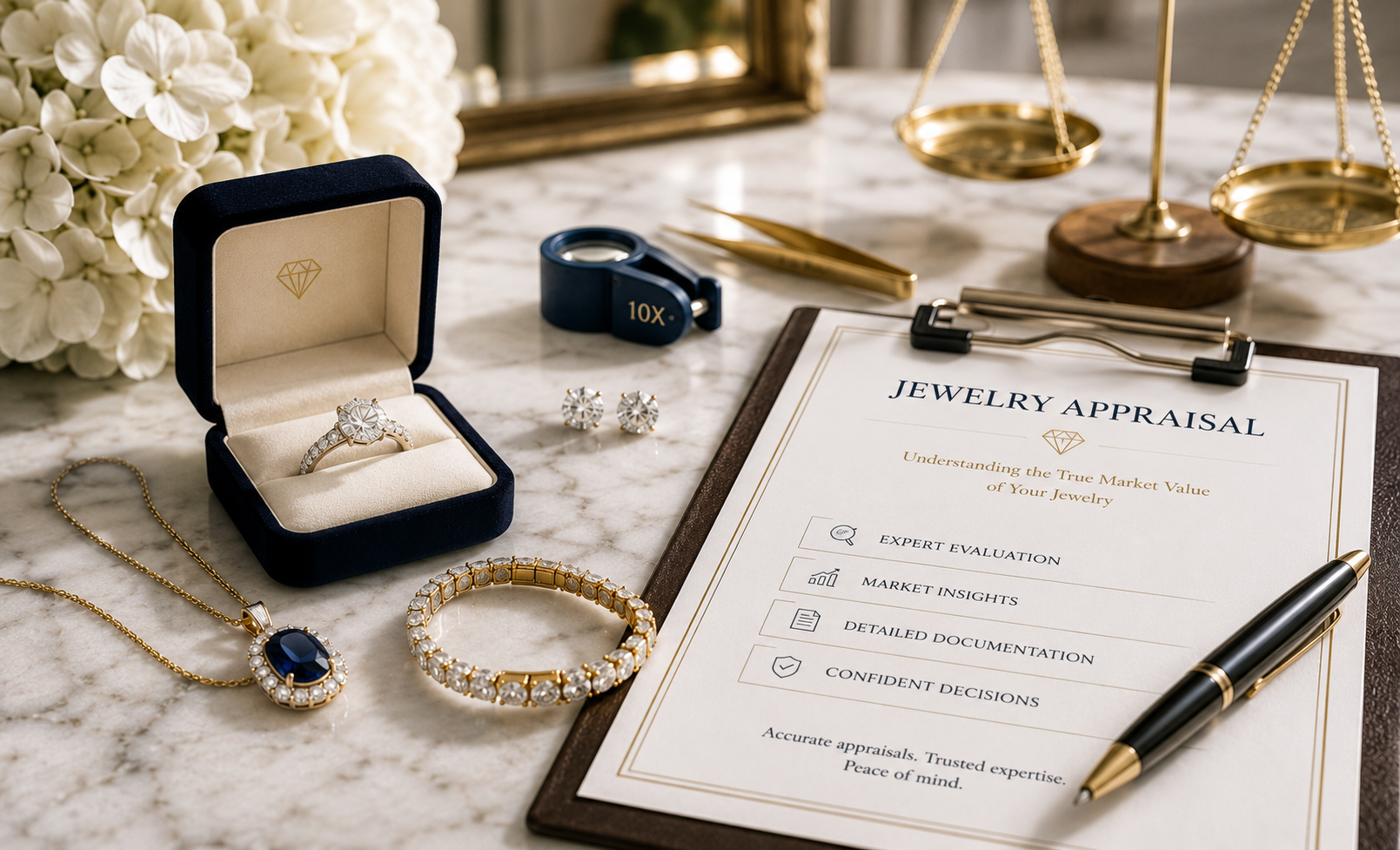
One of the most common misconceptions about jewelry is that its value is the same in every situation. In reality, a diamond ring may have one value for insurance purposes, another for an estate, and yet another if it were offered for sale on today's market. Understanding which value applies—and why—is essential when making informed financial, legal, or personal decisions.
LaPorte Jewelry Appraisals provides independent Fair Market Value jewelry appraisals for clients throughout Austin and Central Texas. Whether you're settling an estate, navigating a divorce, planning your financial future, documenting assets, or simply curious about what your jewelry is worth in today's marketplace, you'll receive an objective appraisal prepared according to recognized professional standards.
Every appraisal is completed by Linda LaPorte, a Graduate Gemologist (GIA), Accredited Member of the American Society of Appraisers (ASA), and jewelry professional with more than 22 years of industry experience. Because LaPorte Jewelry Appraisals does not buy or sell jewelry, every opinion of value is independent, unbiased, and supported by current market research.
Fair Market Value is one of the most commonly used definitions of value in the appraisal profession.
In general terms, it represents the price at which property would change hands between a willing buyer and a willing seller, with both parties having reasonable knowledge of the relevant facts and neither being under pressure to complete the transaction.
Unlike an insurance appraisal—which estimates the cost to replace jewelry with a comparable new item—Fair Market Value reflects what the jewelry would reasonably be expected to bring in the current marketplace under typical conditions.
Determining Fair Market Value requires an understanding of current jewelry markets, gemstone quality, precious metal values, craftsmanship, brand recognition, rarity, and comparable sales.
What Is Fair Market Value?
Fair Market Value is one of the most commonly used definitions of value in the appraisal profession.
In general terms, it represents the price at which property would change hands between a willing buyer and a willing seller, with both parties having reasonable knowledge of the relevant facts and neither being under pressure to complete the transaction.
Unlike an insurance appraisal—which estimates the cost to replace jewelry with a comparable new item—Fair Market Value reflects what the jewelry would reasonably be expected to bring in the current marketplace under typical conditions.
Determining Fair Market Value requires an understanding of current jewelry markets, gemstone quality, precious metal values, craftsmanship, brand recognition, rarity, and comparable sales.
Fair Market Value vs. Insurance Replacement Value
Although both are professional appraisals, they serve very different purposes.
Fair Market Value
Reflects current market value
Often used for estates, divorce, and financial planning
Based on current buying and selling conditions
May differ significantly from purchase price
Insurance Replacement Value
Reflects the estimated cost to replace an item with a comparable new piece
Used to obtain or update jewelry insurance coverage
Based on current retail replacement costs
May be higher than market value depending on retail conditions
Choosing the appropriate type of appraisal helps ensure the valuation aligns with your intended use.
What Factors Influence Fair Market Value?
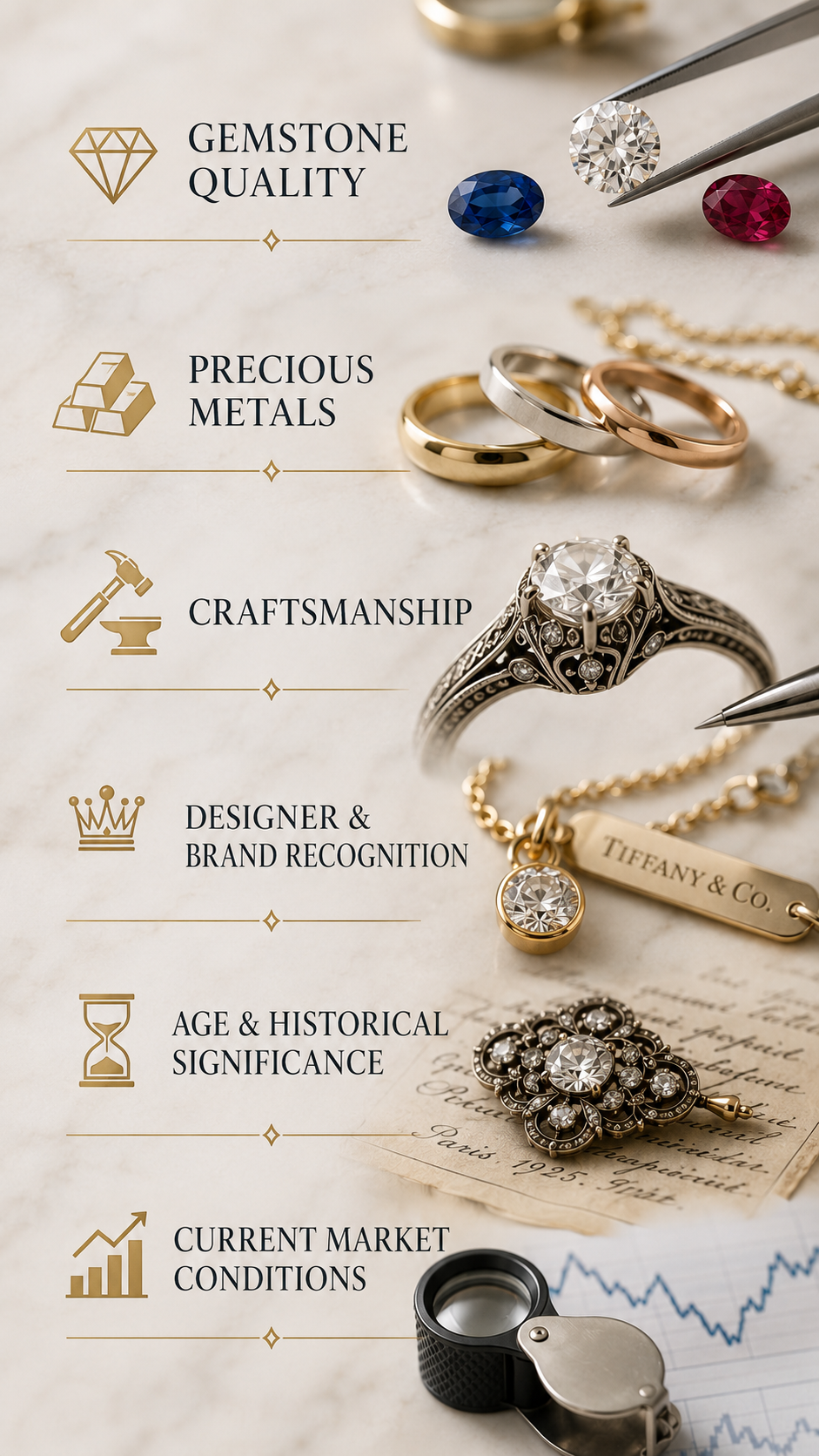
Several characteristics contribute to a jewelry item's value, including:
Gemstone Quality
Diamonds and colored gemstones are evaluated based on factors such as quality, size, rarity, treatments, and overall appearance.
Precious Metals
Current market prices for gold, platinum, and other precious metals influence value but represent only one component of the appraisal.
Craftsmanship
Construction quality, design complexity, and manufacturing techniques can significantly impact value.
Designer & Brand Recognition
Pieces from recognized designers or luxury brands may command different market values than comparable unsigned jewelry.
Age & Historical Significance
Antique and vintage jewelry may derive additional value from rarity, historical importance, or collectible demand.
Current Market Conditions
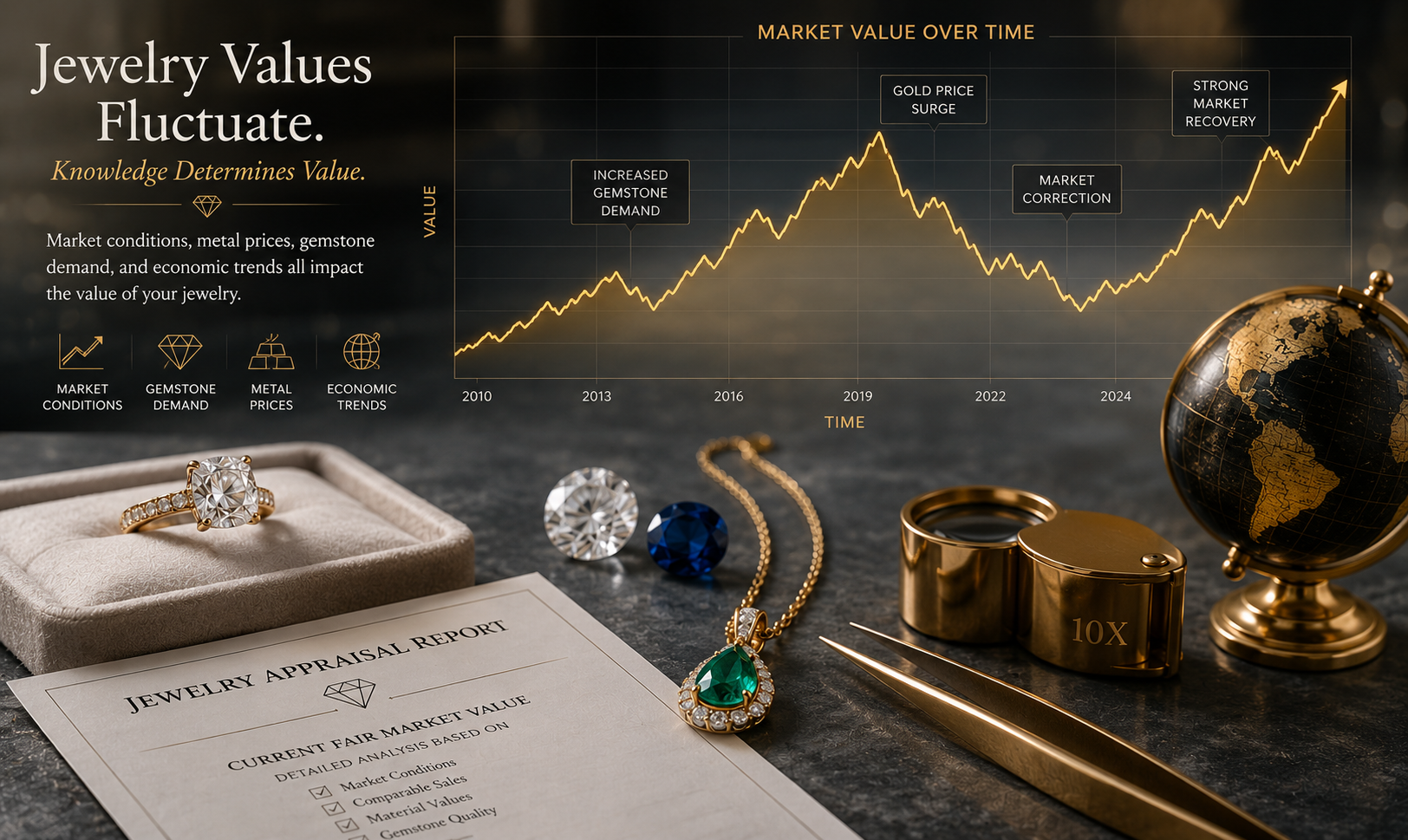
Jewelry markets change over time. Supply, demand, precious metal prices, and consumer trends all influence current market value.
Let's Work Together
Whether you have a question, an idea, or just want to say hello, feel free to reach out—we’re here to help.